Summary
“Wasp nests in lofts or eaves can quickly become a structural and health hazard. Learn the signs of a growing colony and why DIY removal often leads to dangerous results for Romford homeowners.”
Summer in Romford is a time for enjoying local parks like Raphael Park or hosting family barbecues in Gidea Park gardens. However, nothing spoils an outdoor gathering faster than the persistent, aggressive buzzing of wasps. While a single wasp is a nuisance, a nest on your property is a significant safety concern.
If you have noticed an influx of yellow-and-black insects hovering around your roofline, garden shed, or air bricks, you likely have a colony nearby. The big question for many homeowners in the RM postcode area is: Can I handle this myself, or is it time to call for help?
In this guide, we will break down the risks of DIY treatments, how to identify the severity of your situation, and when it is essential to contact professional experts to ensure your home remains safe.
Summary: The “Safety-First” Checklist
- Don’t DIY if: The nest is larger than a tennis ball, located at height, or in an enclosed space like a loft.
- Identify the Pest: Ensure you are dealing with wasps (Vespula vulgaris) and not beneficial honeybees.
- Check for Allergies: If any family member is allergic to stings, professional removal is the only safe option.
- Professional Advantage: pest experts in Romford use industrial-grade equipment that neutralizes the nest instantly and safely.
Understanding the Wasp Season in Romford
In East London and Havering, wasp activity typically peaks between July and September. During the spring, a lone queen begins building a small, golf-ball-sized nest. By mid-summer, that same nest can house between 3,000 and 10,000 workers.
As the season progresses into autumn, wasps become more aggressive. Their natural food sources dwindle, and they often become “drunk” on fermenting fallen fruit in gardens. This makes them highly defensive and more likely to sting without provocation. Knowing when the colony is at its most volatile is key to deciding when to intervene.
Step 1: Identify the Nest and the Species
Before taking action, you must confirm what you are dealing with. Treating a bee nest is often unnecessary and environmentally damaging, whereas a wasp nest in a high-traffic area is a genuine hazard.
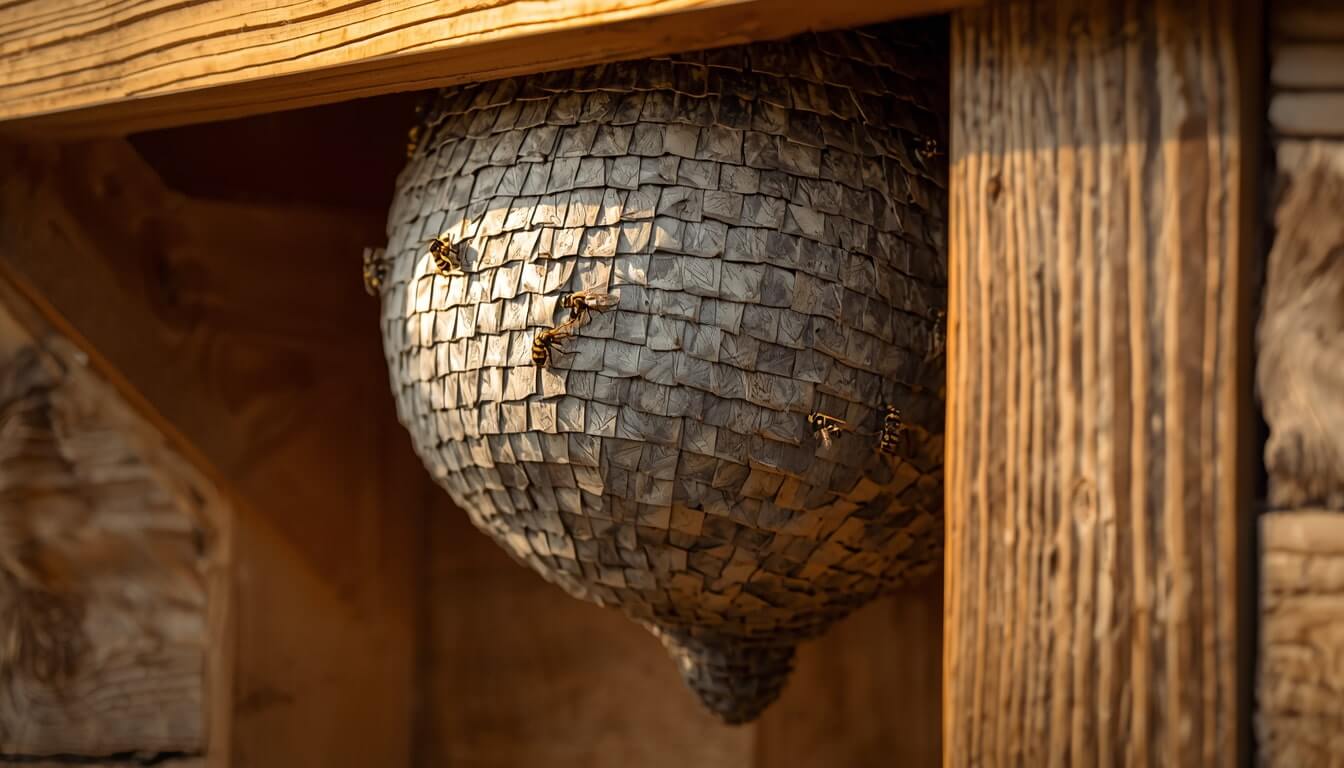
- Common Wasps: Bright yellow and black with a distinct “waist.” Their nests look like grey, swirl-patterned paper.
- Hornets: Much larger than wasps with an orange/brown tint. Their stings are significantly more painful and can require emergency removal.
- Honeybees/Bumblebees: Furrier and less aggressive. We generally recommend leaving bees alone or contacting a local beekeeper for relocation.
If you aren’t sure what is flying around your eaves, take a look at our guide on common signs of a pest infestation in Romford for visual cues and behavior patterns.
Step 2: Assess the “Danger Zone”
Not every wasp nest requires immediate removal. If a nest is at the bottom of a very large garden and away from human activity, it can often be left until the winter when the colony dies off naturally. However, you should call for wasp nest removal in Romford if the nest is in any of the following locations:
- Near Entrances: If the nest is above a front door, back door, or frequently used window.
- In the Loft: Wasps in the attic can eventually chew through plasterboard, leading to insects entering bedrooms.
- In Wall Cavities: These are the most dangerous to treat yourself because the wasps have limited escape routes and will fly directly at the person “attacking” the entry hole.
- Children’s Play Areas: If the nest is near a swing set, trampoline, or shed where children spend time.
Step 3: The Risks of DIY Wasp Removal
It is tempting to pick up a “wasp foam” from a local Romford hardware store. However, DIY removal is one of the leading causes of pest-related injuries in the UK.
- The Aggression Factor: When a wasp nest is under attack, the insects release a “distress pheromone.” This signals every wasp in the colony to exit the nest and attack the perceived threat simultaneously.
- Ladder Hazards: Many Romford nests are located in the soffits or gutters. Attempting to spray a nest while balanced on a ladder is incredibly dangerous; if you are swarmed while at height, the risk of a fall is high.
- Incomplete Elimination: DIY sprays often only reach the outer “envelope” of the nest. This leaves the queen and thousands of larvae alive inside, resulting in a more aggressive colony that is now “bait-shy.”
- Flashlight Attraction: Wasps are attracted to light at night. If you try to treat a nest in the dark using a torch, the wasps will fly directly toward the light source which is usually right in front of your face.
Step 4: Why Professional Removal is the Best Choice
When you hire local pest experts in Romford, you aren’t just paying for the removal of the nest; you are paying for safety and specialized technology.
Professional technicians use:
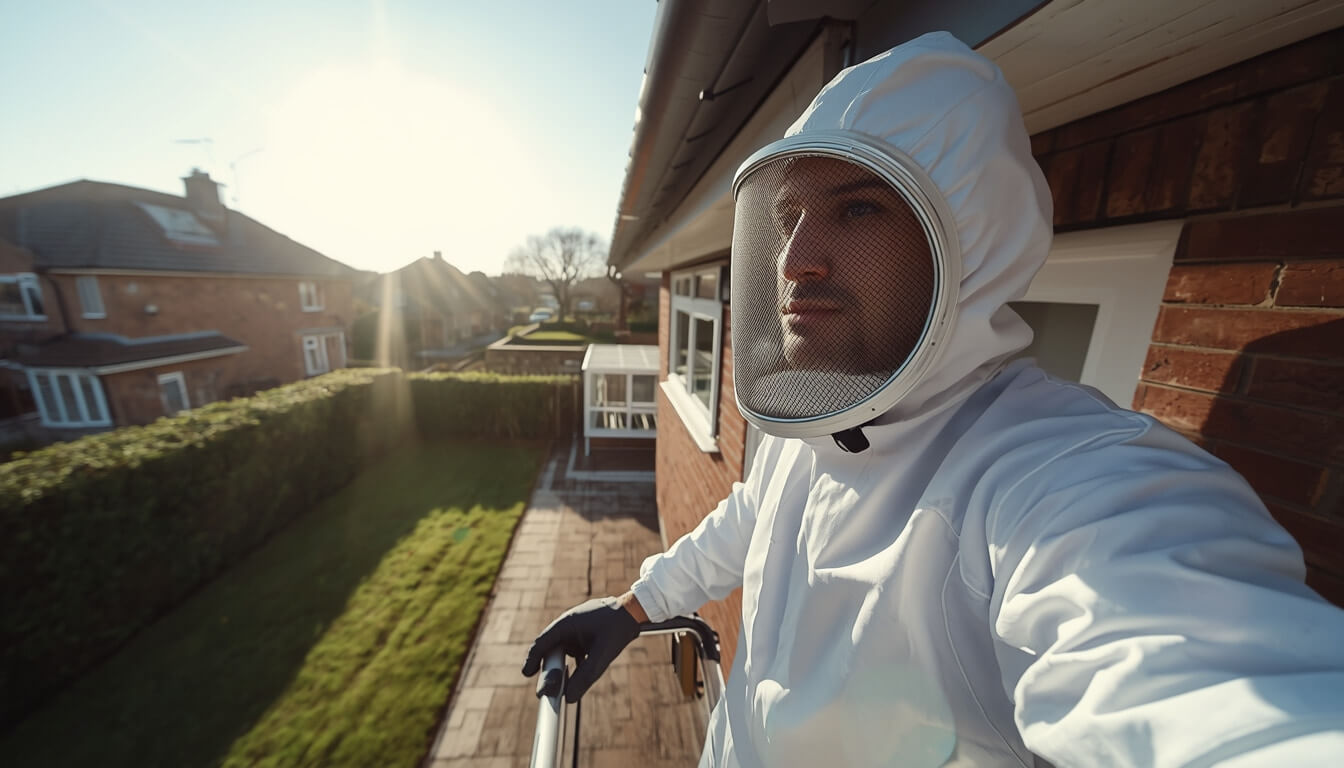
- Full PPE: Heavy-duty, sting-proof suits and veils.
- High-Pressure Lances: These allow us to inject professional-grade insecticide dust (such as Permethrin) deep into the heart of the nest from a safe distance, often without needing ladders.
- Guaranteed Results: Most professional treatments work within 2 hours. If the nest remains active after 24 hours, a professional service will typically return to finish the job at no extra cost.
By utilizing smart pest control tips in Romford, professionals can also identify why the wasps chose your home in the first place—such as gaps in the mortar or easy access to your loft and advise on how to prevent them from returning next year.
Step 5: Cost and Local Services
In the London Borough of Havering, homeowners often compare private pest control to council services. While the council may offer treatments, they often have long waiting lists during the peak of summer. A private specialist can usually offer same-day or next-day emergency wasp nest removal in Romford, which is crucial if you have a family member with a sting allergy.
Aftercare: What Happens to the Nest?
A common question we hear is: “Do you take the nest away?”
In most cases, the nest is left in situ for 24 hours. This is because “foraging” wasps that were out in the garden when the treatment happened will return to the nest. By leaving the nest in place, these returning wasps will pick up the insecticide and die, ensuring the entire colony is eradicated. Once the nest is dormant, it will never be reused by wasps the following year.
Frequently Asked Questions (FAQ)
How much does wasp nest removal cost in Romford?
Prices vary depending on the height and accessibility of the nest, but professional treatment is generally affordable and offers a guarantee that DIY methods lack.
Will wasps come back to the same spot?
Wasps do not reuse old nests. However, if your home has attractive features like exposed wooden beams or perfect cavity gaps a new queen might choose a nearby spot next spring. This is why “proofing” your home after a treatment is recommended.
Can I use boiling water or fire to remove a nest?
Never. Using fire is a massive fire risk to your property, and boiling water is rarely effective, usually resulting in the person being severely stung by an angry colony.
What should I do if I am stung?
If you are stung, wash the area with soap and water and use a cold compress. If you experience difficulty breathing, swelling of the throat, or dizziness, call 999 immediately, as this indicates an anaphylactic reaction.
Conclusion: Prioritize Your Safety
When it comes to wasp nest removal in Romford, the “When to call professionals?” answer is simple: if the nest is active, accessible to people, or in a hard-to-reach area, don’t risk your safety.
A professional treatment is fast, effective, and provides the peace of mind that your garden and home are safe for your family to enjoy.
If you’ve spotted a nest or have concerns about increased wasp activity around your Romford home, contact Saxon Pest Management today. We provide expert, local solutions to keep your home pest-free all summer long.